
Walking into the grocery store with the intention of buying clean, real food can feel overwhelming. Every aisle is full of countless items staring back at you, most with some sort of "health claim" written on them. But which ones are actually good for you?
That's where this clean eating shopping list comes in. An easy guide that will help you skip the guess work and fill your cart with real, minimally processed foods to nurture yourself and your loved ones.
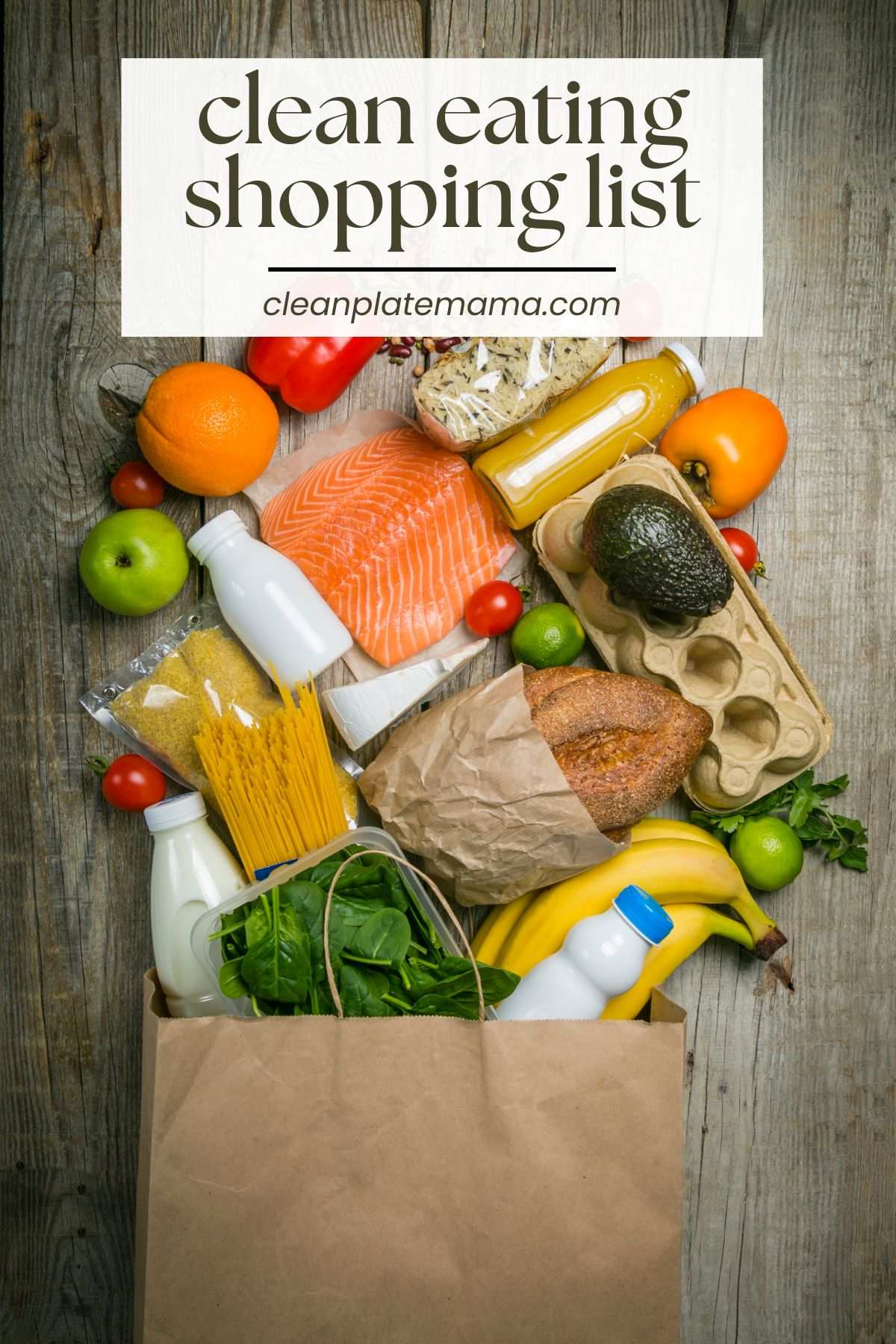
This clean eating list includes common items that you'll find in most groceries stores that fall within the category of "clean eating."
My goal is NOT to give you a laundry list of items, but to simply give you a place to start. By no means is this all-encompassing, but rather a simple list to help you navigate the grocery stores and stock your kitchen with clean eating foods.
Whether you've been on a clean eating journey for a while, or you are a beginner, this list is for you.
Let's get started!
Jump to:
What is Clean Eating?
Clean eating is choosing foods that are in their most natural/unprocessed form. It's going back to the basics and eating what nature has provided. Think fruits, vegetables, whole grains, quality proteins, full-fat dairy, nuts, seeds, and healthy fats.
It's not a diet, it's a lifestyle that focuses on real, nutrient dense foods that limits ultra-processed foods and artificial ingredients. And not to say ultra-processed foods are completely off limits (I enjoy going out for ice cream as much as the next person), it's about making choices that are right for you that align to clean eating lifestyle.
What does clean eating look like for me? I focus on a 80/15/5 approach -80% clean eating, 15% better-for-you processed foods, and 5% "junk foods." I live in the real world - kids, running my blog, busy life. I simply cannot make everything from scratch. And I really try not to stress too much about it (sometimes it's a struggle, but I'm getting better).
For a more in-depth look at clean eating, check out my clean eating for beginners guide.
Clean Eating Shopping List
Okay, let's get to it... As mentioned, my goal here is to give you a digestible list of clean eating grocery items. This list by no means is all-encompassing, but a place to get you started.
It is broken out by categories to make it more digestible. And where I feel it's needed, I have linked to some of my favorite brands.
💚 Lastly, I have noted where I feel organic options are best, or where quality matters (to get the most nutritional benefit). If this is not an option for you, their conventional counterparts are still excellent choices.
Fruits and Vegetables
When it comes to fruits and vegetables, nothing is off limits. Below are the most common you will find in most grocery stores.
Vegetables
- Leafy greens*
- (spinach, kale, chard, etc.)
- Broccoli
- Cauliflower
- Celery
- Cucumber
- Asparagus
- Bell peppers
- Green beans
- Eggplant
- Mushrooms
- Zucchini
- Tomato
- Cabbage
- Brussels sprouts
- Onion
- Radishes
- Microgreens*
- Potatoes*
- Squash (acorn, butternut, spaghetti)
Fruits
- Blueberries*
- Strawberries*
- Blackberries*
- Raspberries
- Bananas
- Apples
- Avocado
- Peaches/nectarines*
- Pears*
- Apricots
- Cherries*
- Grapes*
- Oranges
- Kiwi
- Mango
- Melon
- Pineapple
- Plums
💚 *These items are commonly on the Environmental Working Group's (EWG) dirty dozen list. If possible, choose organic.
Whole Grains
Grain products should come from whole, unrefined grains (meaning it includes the bran, endosperm, and germ of the grain).
Flours
- Whole wheat flour*
- White whole wheat flour or quality white flour*
- Einkorn flour*
- Spelt flour*
- Oat flour
- Buckwheat
Grains
- Farro*
- Whole wheat pasta* - spaghetti and penne
- Sprouted whole grain bread* - Ezekiel is a good store-bought option
- Rolled oats/old-fashioned oats
- Brown rice pasta - spaghetti and fusilli
- Brown rice
- Wild rice
- Quinoa
- Popcorn
*Contain gluten. Do not consume if you are on a gluten-free diet. If needed, use certified gluten-free oats & oat flour as oats can become contaminated during processing, or make your own oat flour recipe.
💚If possible, choose organic grains. Conventional grains are often treated with pesticides (and sometimes with glyphosate before harvest). Organic options help reduce exposure to potentially toxic pesticides and herbicides, as well as support healthier farming practices.
Eggs & Dairy
Eggs
- Pasture-raised and/or organic are best. If you have access to local eggs, that is even better!
Dairy
- Whole milk
- Plain yogurt or kefir (no added sugars or fillers; look for live and active cultures).
- Pasture-raised butter
- Cheese (short ingredients list: milk, cultures, enzymes, salt)
- Goat cheese
- Full-fat cottage cheese (short ingredient list, no fillers, gums, etc.)
- Unsweetened non-dairy alternatives (the ingredient list should be the source of the milk, water, and possible salt - no added fillers, gums, oils).
💚 For both eggs and dairy products, check for animal welfare certifications to ensure humane treatment of the animals.
💚 Look for grass-fed dairy products, if possible, as they are more nutritious (higher in omega-3's and certain vitamins).
💚 Organic certification ensure no growth hormones or antibiotics and that the animals were fed organic feed.
Meat, Seafood and Beans
Beef
- Ground beef
- Steaks
- Roasts
- Pork products
White Meat
- Chicken
- Turkey
Seafood
- Salmon
- Shrimp
💚Beef - Whenever you can, choose 100% grass-fed/grass finished beef and/or organic - it's packed with more nutrients than conventional beef.
💚Pork - Opt for antibiotic-free and nitrate-free pork products - by law, pork is always hormone free.
💚White Meat - For the cleanest option, choose organic or antibiotic-free chicken and turkey. Chicken and turkey are always hormone free by law.
💚Seafood - Choose wild-caught or sustainable seafood, especially options rich in omega-3s and low in mercury, like salmon and shrimp. If it's farmed, look for certifications such as 'Responsibly Farmed ASC Certified.'
Beans
- Black beans
- Pinto beans
- Kidney beans
- Cannellini beans
- Garbanzo beans
- Lentils
- Frozen edamame
💚For the cleanest option, go with dried beans-you're getting just the bean and nothing else. If canned is easier, that's fine too. Just look for beans with simple ingredients (beans, water, maybe salt) and BPA-free cans.
Healthy Fats, Nuts and Seeds
Oils
Clean eating oils consist of oils that have not gone through extreme processing. Avoid highly refined oils like canola oil, sunflower oil, soybean, safflower, palm, grapeseed.
Extra-virgin olive oil
Unrefined coconut oil
Avocado oil
Nut Butters, Nuts and Seeds
Nut Butters
- Peanut butter - Once Again or Santa Cruz
- Almond butter - Dastony or Once Again
- Cashew butter - Dastony or Artisana Organics
Nuts
Seeds
- Chia seeds- Navitas
- Hemp seeds- Manitoba Harvest
- Flaxseed Meal- Bob's Red Mill
- Pumpkin seeds- Woodstock
💚Nut and seed butters should contain just the nut/seed and maybe salt. They should not contain added oils, sugars, preservatives.
💚Look for raw (and maybe salted) nuts with no added oils.
💚If concerned about pesticide exposure, opt for organic if it's an option. According to Ceres Organics, conventional nuts are known to be heavily sprayed with pesticides.
Sweeteners and Condiments
Sweeteners should be natural and unrefined. Remember, these still count as sugar, so use sparingly.
- Raw honey - Nature Nates
- Pure maple syrup - Now Foods
- Coconut sugar- Madhava
- Dates- Joolies
Dressings, Condiments and Sauces
Dressings
- Ranch dressing - Primal Kitchen
- Caesar - Primal Kitchen
- Balsamic - Primal Kitchen or Chosen Foods.
- Italian - Foods Alive
Condiments & Sauces
- Mayonnaise - Sir Kensington's and Chosen Foods
- Ketchup - Primal Kitchen and Organicville.
- Mustard - Annies yellow mustard and Primal Kitchen Dijon mustard)
- Marinara Sauce - Primal Kitchen and Newman's Own
- BBQ Sauce - Noble Made, True Made Foods, and Primal Kitchen
💚The biggest thing with store-bought dressings is to ensure they are made with unrefined oil (like avocado oil), have simple ingredients you could purchase yourself, and minimal added sugar (natural/unrefined sugars are best).
💚It's also hard to find true clean eating dressings and condiments, but the above are much better-for-you options. Or you can also try making some on your own. Try my easy maple Dijon dressing, dairy-free ranch dressing, easy balsamic vinaigrette, clean eating taco seasoning or Whole30 BBQ sauce.
Miscellaneous Pantry Staples
- Coconut aminos - Coconut Secret
- Chicken bone broth - Bare Bones and Kettle and Fire
- Beef bone broth - Bare Bones and Kettle and Fire
- Balsamic vinegar - Private Selection
- Apple cider vinegar - Bragg
- Almond flour* - Terrasoul (organic) or Bob's Red Mill
- Coconut flour*
- Cassava flour*
- Tapioca flour*
- Cacao
- Chocolate chips
- Herbs & Spices - Organic options are best to ensure purity and quality.
*I use these a lot in gluten-free baking. If you aren't gluten-free, you probably won't find much use in these.
Snacks & Other Common Items
When it comes to store-bought snacks, always check the ingredients and the total added sugars. The fewer the ingredients, the better. Below is a list of common brands that make better-for-you options.
Salty Snacks
- Lesser Evil - popcorn, spaceballs, and cheezmose are our favorites!
- Siete - corn chips and grain-free tortillas are our favorites.
- Boulder (if made with avocado oil or extra-virgin olive oil)
- Simple Mills - Seed crackers and cheddar crackers are our favorites.
Sweet Snacks
- Simple Mills - we love honey cinnamon thins and cookies.
- Emmy's
- Hu Kitchen
- Solely "fruit snacks"
- Pure Organic fruit bars
💚For true "clean eating" snacks, avoid highly refined oils (canola, sunflower, safflower, soy), ensure anything with grains is organic (to avoid chemicals), and naturally sweetened. Most packaged snacks are not perfect, but the above are better-for-you options (and where my 15% comes into play).
And try making some of your own snacks. Start with my healthy protein granola bars, no-bake protein bars, banana muffins with protein, or peanut butter oatmeal bars.
Or skip the store-bought cereal all together and make easy oats and honey granola and enjoy with milk for you cereal fix.
Tips for Clean Eating Grocery Shopping
- Read ingredient labels. If you aren't buying a whole food (vegetable, single ingredients grain, meat, etc.), get in the habit of reading the ingredient label. What is actually in the food. Can you pronounce the ingredients? Could you buy them yourself? If you can answer "yes" to both of those questions, you are on the right track!
- Don't stress! This has been an ever evolving one for me! But stress is not good for you either, so if the packaged food isn't "perfect," it's okay! Focus on eating clean when you can, and if a few overly processed foods sneak their way in, don't stress.
- Buy local. If you have a farmers market nearby, or a local farm stand/or farm delivery service, give them a try. Not only are you able to get fresher foods, you are also supporting your local farmers.
Printable List
Here is a printable list (PDF format) for you to print and take with you. Also includes a blank shopping list to start creating your clean eating grocery list.
Lastly, please let me know wha you think about this list! What is missing, or what questions do you still have? Comment below and I'll get back to you right away. You can also contact me directly!

Sara says
Love the simplicity of this list and the explanation of what to look for when shopping.